

What's Really in Your Baby's Teether? (Most Moms Don't Know)
You read every label at the feed store. You know what goes into your animals. So why are most parents handing their babies a mouthful of synthetic chemicals without a second thought?
It starts at 3am. Your baby is screaming, gnawing on their fist, and nothing is working. You reach for the teether you grabbed at the grocery store — the colorful plastic one with the cheerful packaging — and pop it in their mouth.
What you probably didn't do is read the ingredients. Most parents don't. The packaging says "BPA-free" and that feels like enough.
But here's what I've learned: BPA-free doesn't mean safe. And most teethers on the market today are made from materials that should make any label-reading mama stop cold.
"I check the ingredients in my horse's feed, my skincare, my food. It took me embarrassingly long to apply that same standard to my baby's teether."
The Problem With "BPA-Free" Teethers
When the FDA started scrutinizing BPA (bisphenol A) in the early 2010s, manufacturers scrambled. The solution? Swap BPA for BPS — bisphenol S — a nearly identical chemical that behaves in similar ways in the body. The label changed. The ingredient didn't really.
And that's just the beginning. Conventional baby teethers are commonly made from:
- PVC (polyvinyl chloride) — requires plasticizers like phthalates to stay flexible
- Phthalates — endocrine-disrupting chemicals linked to hormonal concerns
- Synthetic dyes and colorants — absorbed through saliva contact
- Petroleum-based plastic compounds
- Chlorine-based processing chemicals
A baby chewing on a teether for hours a day is getting continuous exposure to whatever that teether is made of. Saliva is a solvent. It breaks things down. That's exactly what you want from a teether — and exactly why the material matters so much.
"Natural rubber" isn't always what it seems either.
Many rubber teethers are vulcanized with sulfur compounds or treated with synthetic accelerants during manufacturing. Some contain latex proteins that can cause sensitivities. Always ask what the full manufacturing process looks like — not just what the raw material is.
What to Actually Look For on a Teether Label
Most teether packaging lists broad material categories without specifics. Here's what a genuinely clean teether should be able to tell you — clearly, without marketing language in the way.
| WHAT TO LOOK FOR | RED FLAGS | GREEN FLAGS |
|---|---|---|
| Material source | Vague ("non-toxic plastic," "food-grade silicone") | vegetable-tanned leather |
| Tanning/processing | No disclosure, chrome-tanned | Vegetable-tanned with disclosed process |
| Coatings or infusions | Synthetic flavoring, artificial fragrance | Natural botanicals, food-grade fats |
| Safety certification | Self-certified, vague "tested" | CPSC certified, third-party tested |
| Origin | Unlisted or overseas mass production | Handmade, domestic, traceable |
Why Leather — and Why Vegetable-Tanned Specifically
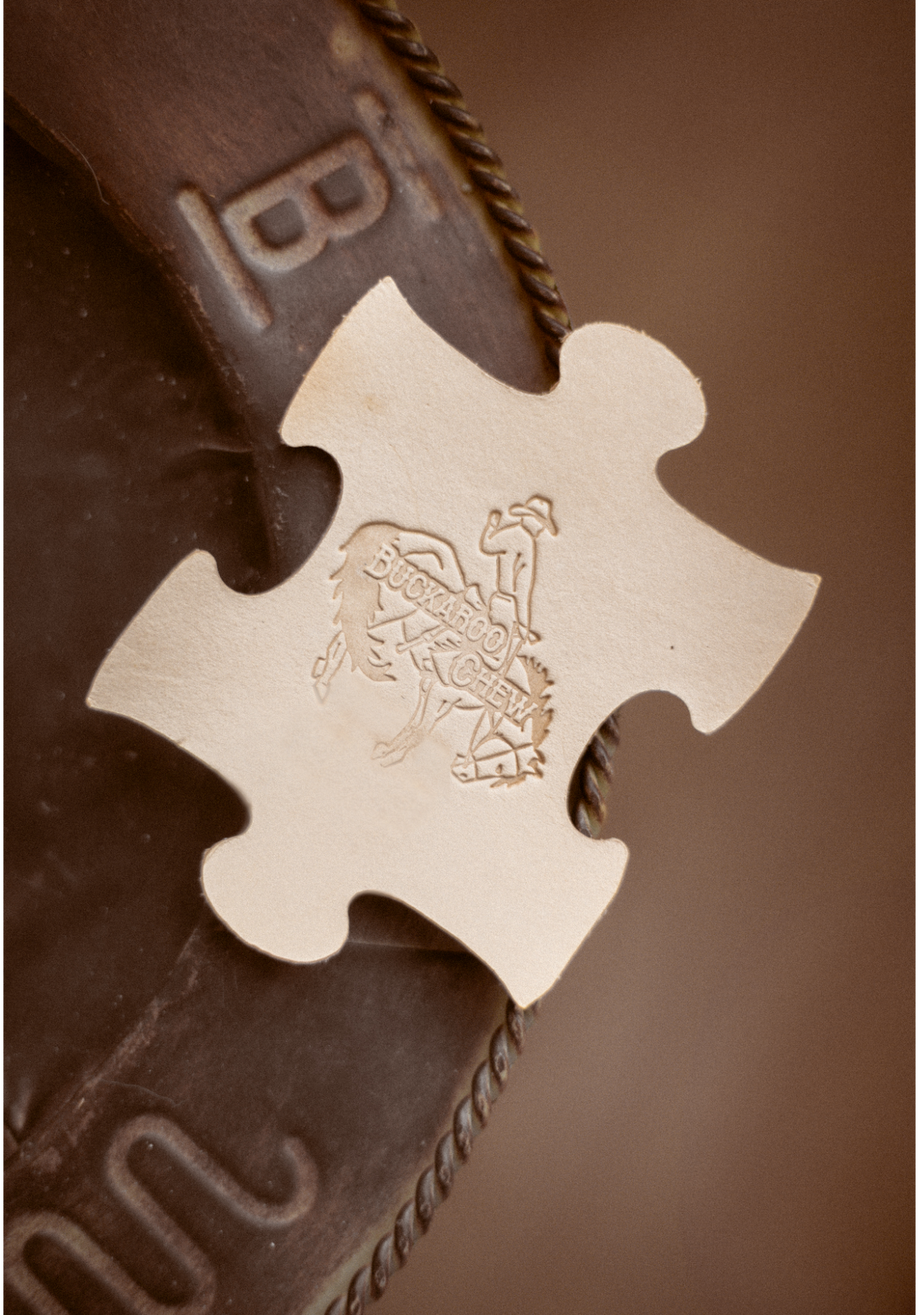
Leather has been used by humans for thousands of years. Long before plastic existed, babies were chewing on leather strips and rawhide to ease teething pain. The texture is firm enough to provide real counter-pressure against sore gums, and natural enough that it breaks down safely with saliva contact.
But not all leather is equal. Chrome-tanned leather — the kind used in most modern leather goods — uses heavy metal salts and synthetic chemicals in the tanning process. You don't want that near a baby's mouth.
Vegetable-tanned leather is different. It uses natural tannins derived from tree bark — oak, chestnut, mimosa — the same process used by leatherworkers for centuries. The result is a firm, natural material with no synthetic processing agents. It smells like leather. It feels like leather. Because that's exactly what it is.
The Chamomile Tallow Difference
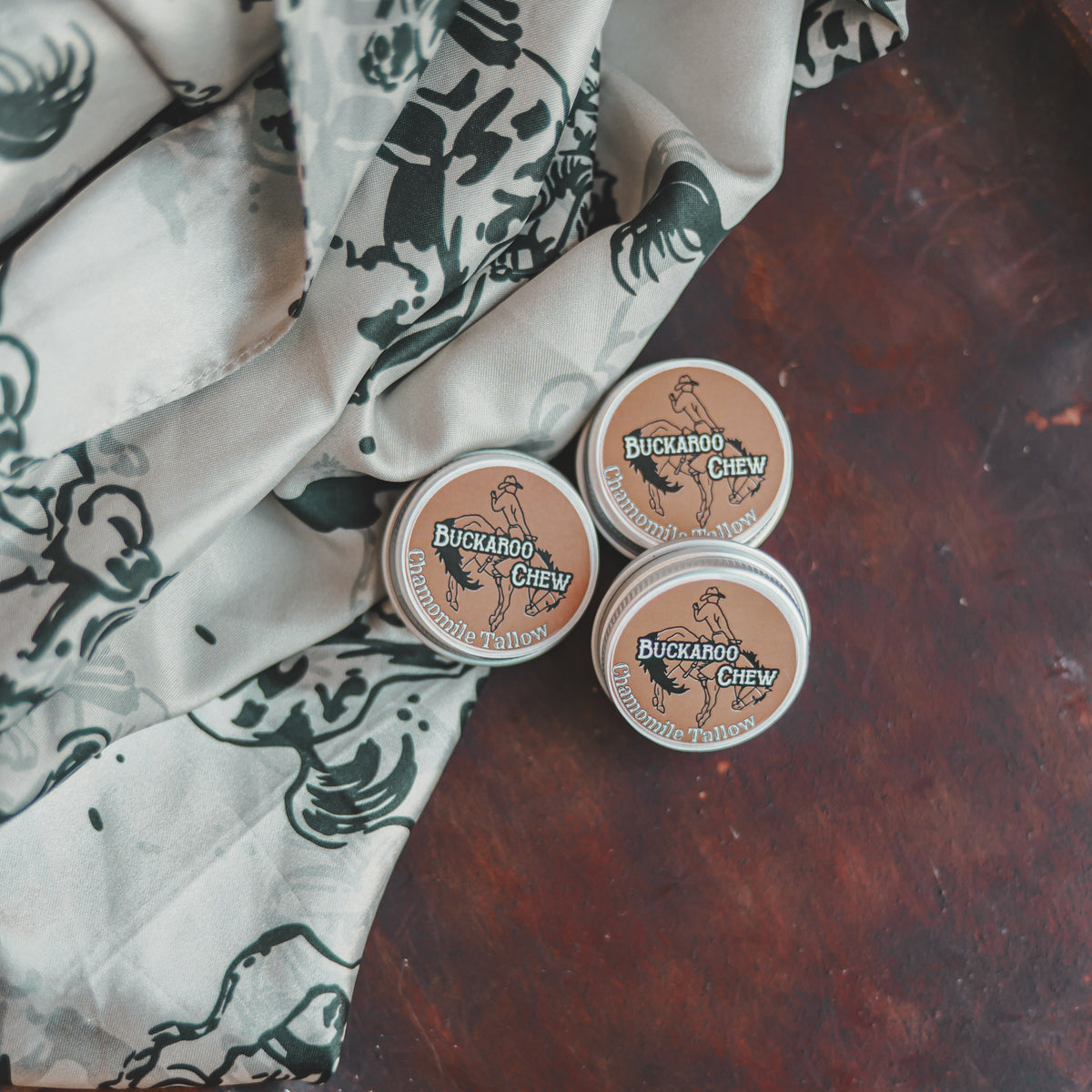
Buckaroo Chew teethers aren't just leather. They're infused with a blend of chamomile and beef tallow — two ingredients with a long history of use on sensitive skin and in natural remedy traditions.
Rich in vitamins A, D, E, and K. Contains omega fatty acids and natural antimicrobial compounds. Deeply compatible with human skin and mucous membranes.
Long used in traditional remedies for its calming properties. Gentle on sensitive tissue. Naturally soothing — both topically and aromatically.
No chrome. No synthetic tanning agents. Just natural tannins from plant sources — the same tanning process used for generations before industrial chemistry.
No PVC. No phthalates. No BPA or BPS. No synthetic dyes or artificial fragrance. Nothing your great-grandmother wouldn't recognize.
CPSC Certified — What That Actually Means
The Consumer Product Safety Commission (CPSC) sets federal safety standards for children's products sold in the United States. CPSC certification isn't self-reported — it requires third-party testing against specific standards for materials, choking hazards, and chemical limits.
Buckaroo Chew teethers are CPSC certified and handmade in the USA. Not manufactured overseas in bulk. Not assembled from imported components. Made by hand, one at a time, in the United States.
The Cowgirl Mama Standard
There's a certain kind of parent who reads every label. Who knows where their food comes from. Who applies the same scrutiny to what goes in their body — and their baby's body — as they do to everything else in their household.
If you check what goes into your horse's feed, your skincare routine, your cleaning products — you should apply that same standard to your baby's teether. The bar isn't higher just because it's a baby product with cheerful packaging.
Real ingredients. Real relief. Nothing fake. That's what Buckaroo Chew is built on.
Give your baby something real.
Vegetable-tanned leather infused with chamomile beef tallow. CPSC certified. Handmade in the USA. Free shipping.
SHOP BUCKAROO CHEWFree shipping · CPSC certified · Handmade in the USA
Frequently Asked Questions
Vegetable-tanned leather — the kind used in Buckaroo Chew — is safe for babies to chew on. It's processed using natural plant tannins with no synthetic chemicals, heavy metal salts, or artificial dyes. Buckaroo Chew teethers are CPSC certified and third-party tested for infant safety.
Beef tallow is rendered fat from cattle, rich in fat-soluble vitamins (A, D, E, and K) and omega fatty acids. It's been used for centuries in skincare and food. Tallow is highly compatible with human skin and safe for babies. Buckaroo Chew uses food-grade tallow in its chamomile infusion.
Chrome tanning uses chromium sulfate and synthetic chemicals to quickly process leather. Vegetable tanning uses natural tannins from tree bark in a slower, traditional process. For products that go in a baby's mouth, vegetable-tanned is the only appropriate choice — chrome tanning leaves chemical residues that have no place near an infant.
Buckaroo Chew teethers are designed for teething babies, typically from around 3–4 months when teething symptoms often begin. Always supervise your baby while using any teething product. The teether is CPSC certified and tested for safety to federal infant product standards.
Wipe clean with a damp cloth. Use warm water only NOT hot. Put in freezer for mild cleanings. Do not submerge in water or put in the dishwasher — this will dry out the leather and degrade the tallow infusion. The natural properties of vegetable-tanned leather and tallow are inherently antimicrobial, so light cleaning is generally sufficient.