

Why Parents Are Ditching Plastic Teethers (And What They're Switching To)
If you've ever stood in the baby aisle staring at a wall of colorful plastic teethers wondering which one is actually safe — you're not alone. Every new parent goes through it. You pick one up, flip it over, scan the ingredients label (if there even is one), and ultimately just hope for the best. But what if the teether you've been trusting isn't as safe as the packaging suggests?
The truth is, most conventional teethers on the market today are made from materials that were never designed with your baby's long-term health in mind. And as more parents start asking harder questions about what goes into their baby products, a quiet revolution is happening — one that's leading families away from plastic and toward something far more natural.
The Problem With Plastic and Silicone Teethers
Let's start with what most teethers are actually made of. Walk into any big box store and the shelves are dominated by PVC plastic, BPA-free plastic, and silicone options. While "BPA-free" sounds reassuring, it's worth understanding what that label actually means — and what it doesn't.
BPA (bisphenol A) is a chemical used to harden plastics that has been linked to hormonal disruption. When manufacturers removed BPA from products, many replaced it with similar compounds like BPS and BPF — chemicals that studies suggest may carry similar risks. So while your teether may be technically BPA-free, it isn't necessarily chemical-free.
Beyond the plastic itself, many teethers contain synthetic dyes, artificial fragrances, and chemical softeners. These are materials your baby is putting directly in their mouth — chewing on, sucking on, and drooling all over — for months on end during one of the most critical developmental windows of their life. The gum tissue in teething babies is inflamed and highly absorbent. Whatever is on that teether isn't just sitting on the surface — it has a direct pathway in.
And here's the kicker: beyond the safety concerns, plastic and silicone teethers offer exactly zero nutritional or therapeutic benefit. They're just something to chew on. Nothing more.
What Your Baby's Body Actually Needs During Teething
Teething isn't just uncomfortable — it's a full-body experience. Your baby's gums are swollen and inflamed as teeth push through tissue. Their immune system is working overtime. Their skin may be irritated from excess drool. They're often not sleeping well, which affects everything from mood to development.
What their body needs during this season isn't a piece of plastic to gnaw on — it needs support. Anti-inflammatory ingredients to calm swollen gums. Soothing compounds to ease the ache. Nutrients to support skin health and immune function. Nature has always provided these things. We just stopped looking to nature for answers.
Chamomile, for example, has been used for centuries as a natural anti-inflammatory and calming agent. It's gentle enough for infants and effective enough to make a real difference in gum discomfort. Clove has long been recognized for its natural numbing properties — it's been used in dental care for generations for exactly this reason. Beef tallow, rendered from grass-fed cattle, is one of the most bioavailable sources of fat-soluble vitamins available — vitamins A, D, C, and E — the exact nutrients that support immune health, skin integrity, bone development, and cellular growth.
These aren't fringe ideas. They're time-tested, nature-backed solutions that worked long before plastic was ever invented.
The Case for Vegetable-Tanned Leather
When most people hear "leather teether," their first reaction is skepticism. But once they understand what vegetable-tanned leather actually is — and what it isn't — that skepticism turns into curiosity, and curiosity turns into conviction.
Vegetable tanning is one of the oldest leather-making processes in human history, dating back thousands of years. Unlike conventional chrome tanning, which uses heavy metals and harsh chemicals, vegetable tanning uses natural plant-based compounds — tannins derived from tree bark, leaves, and other organic matter. The result is a leather that is firm, durable, and completely free of the toxic chemical residue that chrome-tanned leather carries.
Mimosa bark, one of the tannins commonly used in vegetable tanning, has natural antimicrobial properties. That means the leather itself actively resists bacterial growth — an important quality in a product your baby will be putting in their mouth daily.
Vegetable-tanned leather is also uniquely satisfying for teething babies. The firmness provides the counter-pressure that sore gums crave. It's not so hard that it causes harm, and not so soft that it provides no relief. It's a material that has been trusted for millennia — and it shows.
Introducing Buckaroo Chew
Buckaroo Chew was born out of a simple but powerful question: why aren't there natural teething options that actually work?
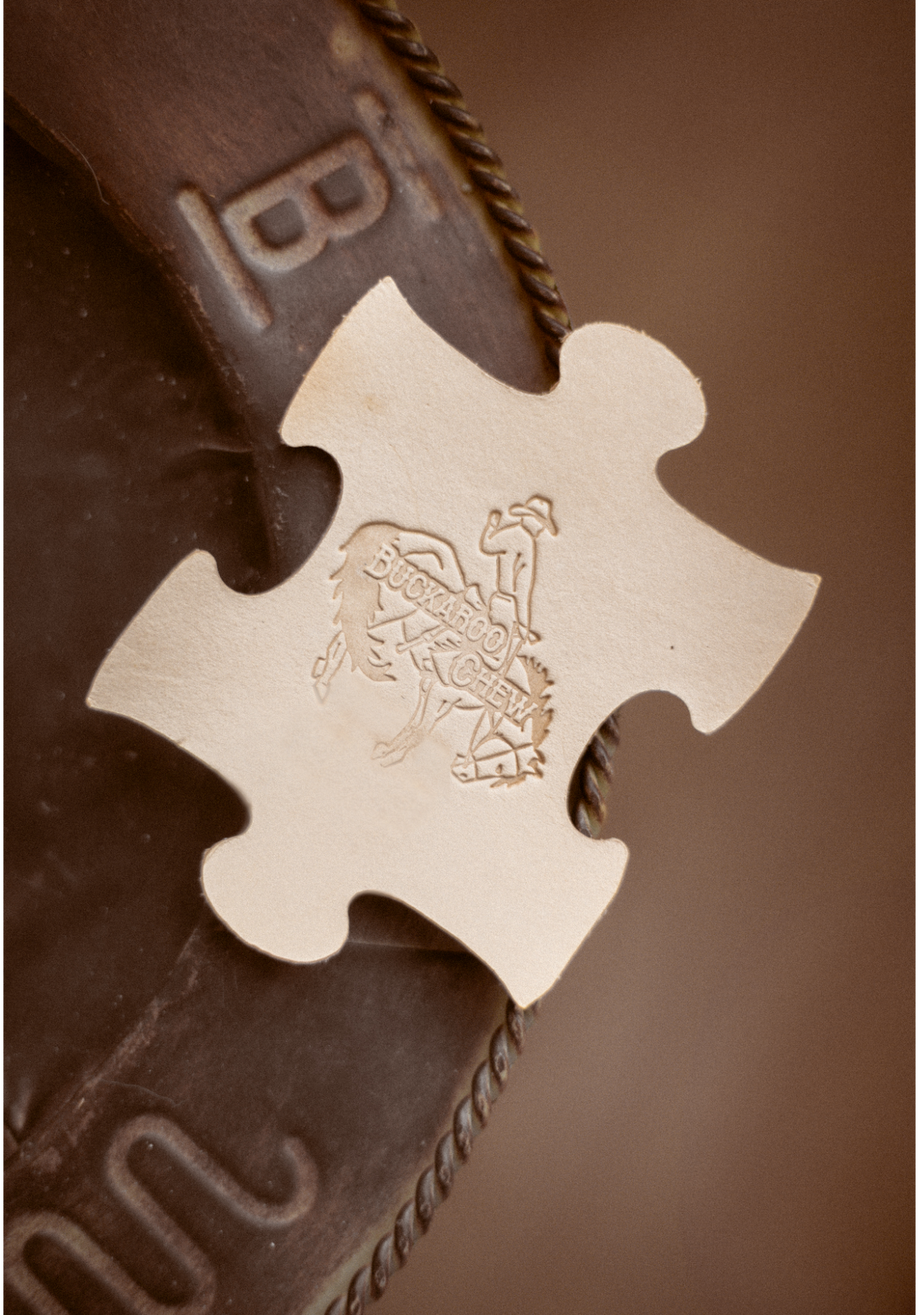
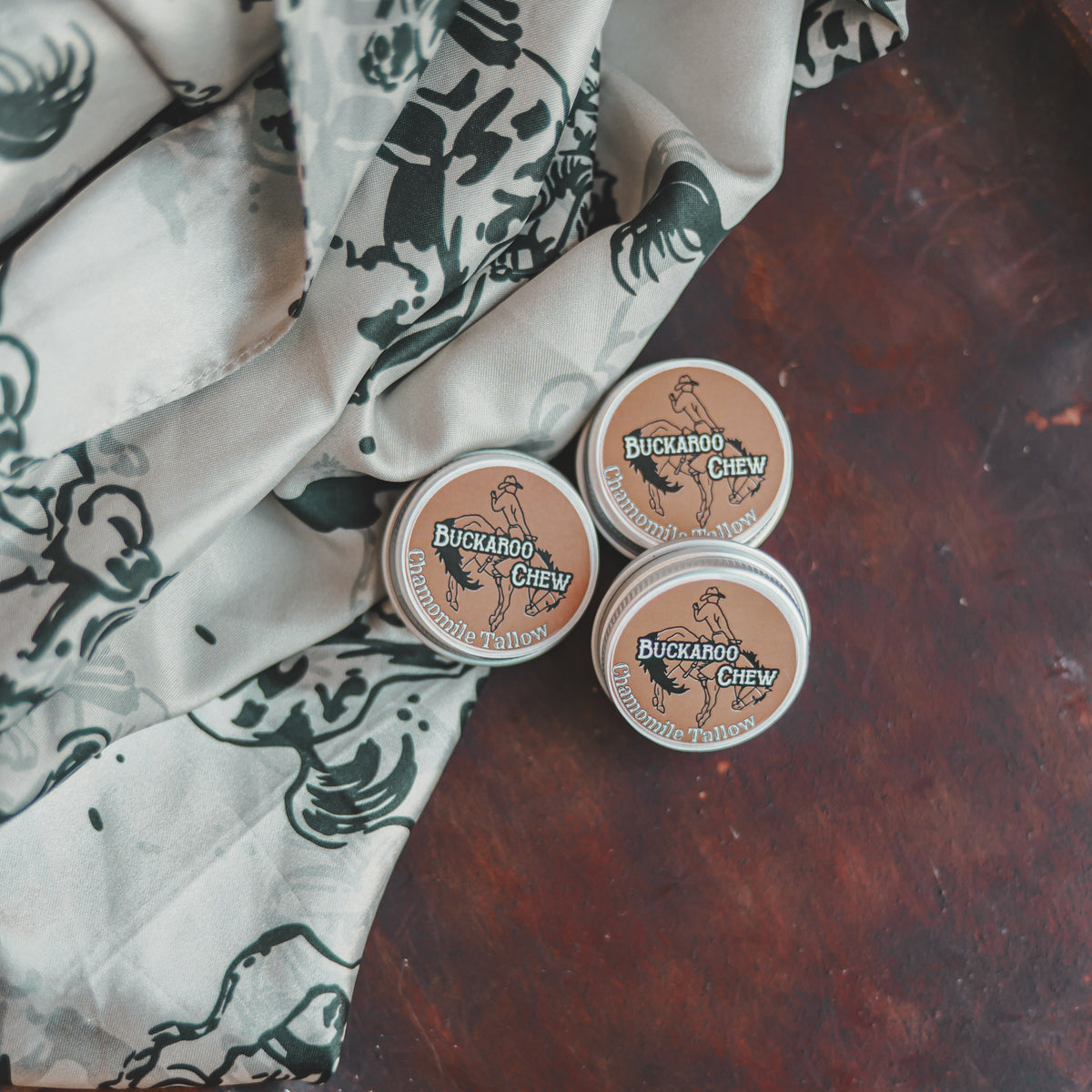
Every Buckaroo Chew teether is handcrafted in the USA from vegetable-tanned leather and paired with a chamomile-infused beef tallow balm. The leather provides the firm chewing surface that delivers gum pressure relief, while the tallow balm — infused with chamomile and clove — delivers natural anti-inflammatory, soothing, and skin-nourishing benefits with every chew.
The tallow itself is a natural source of vitamins A, D, C, and E — nutrients that support your baby's immune system, promote healthy skin, aid in bone development, and protect cells during growth. These aren't added synthetically. They're present naturally, the way nature intended.
Every product is third-party tested and CPSC certified. Each teether is hand-cut and packaged right here in the United States. There are no overseas factories, no mystery supply chains, and no ingredients you can't pronounce. Just clean, purposeful materials that work with your baby's body instead of against it.
The Switch More Parents Are Making
The natural parenting movement isn't a trend — it's a return. A return to asking better questions, demanding better answers, and refusing to accept "good enough" when it comes to what goes in and on our children's bodies.
Parents who make the switch to Buckaroo Chew consistently say the same things: their baby took to it immediately, the fussiness decreased, and they finally felt at peace knowing exactly what their child was chewing on.
That peace of mind is priceless. And your baby's gum health, immune support, and comfort during one of the hardest developmental stages of their life? That's worth getting right.
Plastic had its moment. Natural is what's next.
🤠 Shop Buckaroo Chew at the link in bio.
Buckaroo Chew — Handmade in the USA. CPSC Certified. Third-Party Tested. All Natural.