

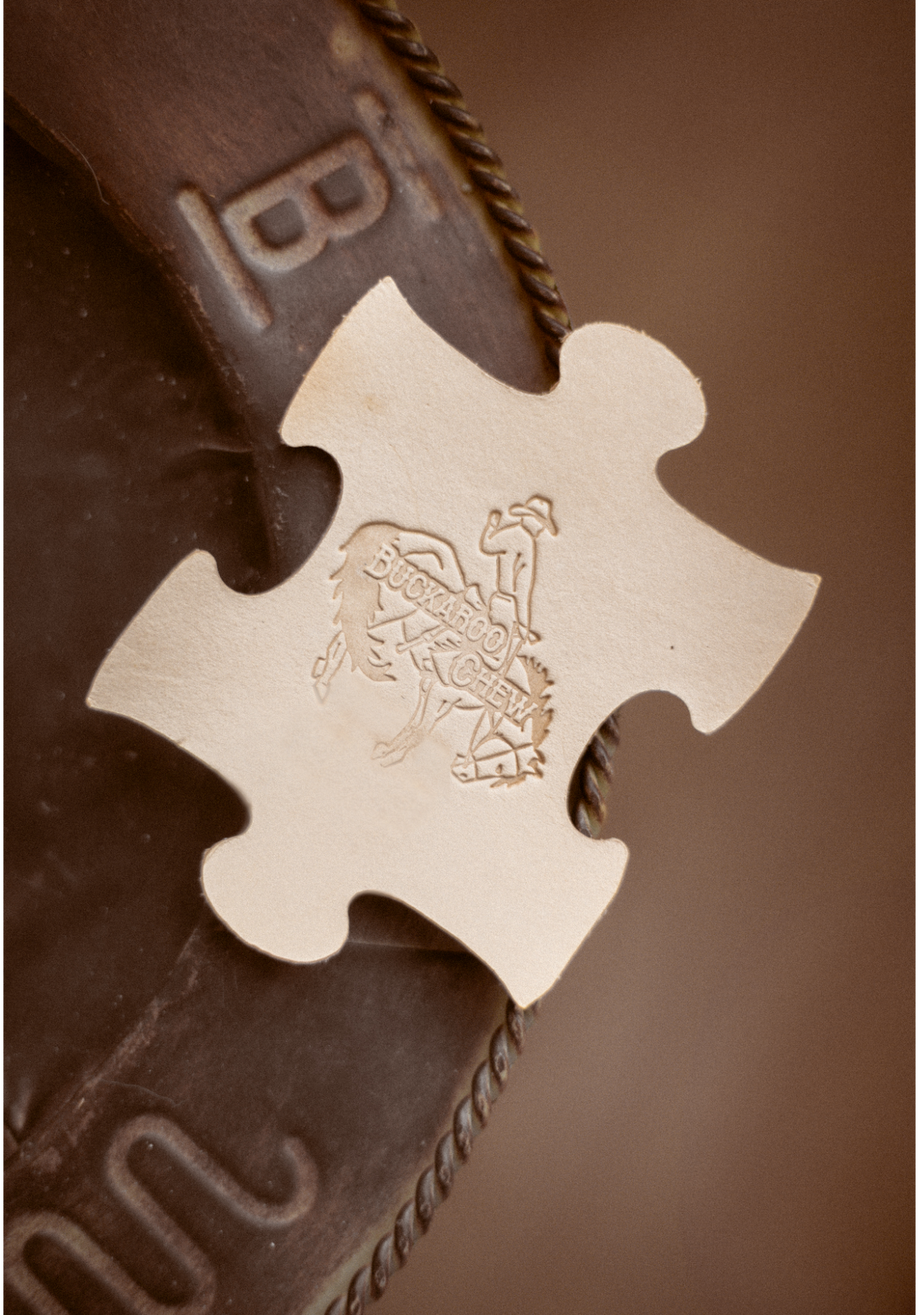


What's Really in a Buckaroo Chew — And Why We Chose It
Walk down any baby aisle and you'll find teethers with a dozen ingredients you couldn't pronounce if you tried. Plastic polymers. Synthetic dyes. "Fragrance" blends that don't legally have to disclose what's inside them. More ingredients isn't more protection — it's more exposure, and more room for something to go wrong.
We built Buckaroo Chew a different way. Here's exactly what's in it, how it's made, and why.
Vegetable-Tanned Leather — Not Chrome-Tanned
Most commercial leather is chrome-tanned, treated with chromium salts and synthetic chemicals to speed up processing and cut costs. That works fine for a wallet or a car seat. It's not something we're comfortable with for a product a baby chews on for hours at a time.
Our leather is vegetable-tanned instead — cured using natural plant tannins, primarily from mimosa tree bark. It's the same method used for centuries before industrial shortcuts took over: slower, more labor-intensive, and free of the heavy metals and synthetic hardeners found in conventional tanning. Mimosa bark itself has a long traditional history as both a tanning agent and, separately, in traditional herbal use — but for our purposes, its job is simple: it's the tanning agent, and it does that job without synthetic chemistry.
Tested — Not Just Trusted
We don't ask you to take our word for it. Our Puzzle Chew is lab-tested through Intertek, one of the most recognized third-party testing labs in the country, and carries a Children's Product Certificate (CPC) — the certification standard legally required for products intended for children under 12, including anything meant for mouth contact.
Mimosa, Chamomile & Tallow: A Look at Three Traditional Ingredients
For centuries, people relied on what grew around them — bark, flowers, and animal fat — for everyday care. Long before synthetic alternatives took over shelves, these three ingredients had their own reputations. Here's a closer look at each.
Mimosa Bark (Albizia julibrissin)
Known in Traditional Chinese Medicine as "he huan pi" (合欢皮), mimosa tree bark has a long history of use in tea and tincture form. It's traditionally associated with mood support and relaxation, and has been used in folk practice as part of routines aimed at easing stress and promoting restful sleep. The tree's pink, silky flowers have their own traditional associations, often used alongside the bark in herbal preparations.
Modern interest in the plant has grown alongside renewed attention to adaptogens and traditional herbal remedies, though most claims remain rooted in historical and traditional use rather than robust clinical research.
Chamomile
Chamomile is one of the most widely recognized herbs in traditional medicine, used for generations as a calming tea and topical remedy. It contains natural compounds like apigenin and bisabolol, which are often cited in discussions of its traditional calming reputation.
Beyond relaxation, chamomile has traditionally been used for mild digestive discomfort when taken as tea, and applied topically for minor skin irritation. It's a mainstay in traditional herbal medicine cabinets across many cultures, from German chamomile tea to topical preparations in skincare.
One note: chamomile is part of the ragweed/daisy (Asteraceae) family, so people with related allergies should be cautious.
Tallow
Rendered animal fat — tallow — has a deep history in traditional skincare and cooking, predating the rise of seed oils and synthetic moisturizers. Nutritionally, tallow is rich in fat-soluble vitamins A, D, E, and K, and its fatty acid profile (heavy in oleic and stearic acid) closely resembles the natural oils found in human skin, which is part of why it's long been favored in traditional skin-care preparations.
Grass-fed tallow in particular contains conjugated linoleic acid (CLA), a compound of ongoing nutritional interest. Its simplicity — often just one ingredient — is part of its traditional appeal, especially compared to modern products with long, synthetic ingredient lists.