



What Childhood Actually Needs (It's Not More Stuff)
There's a quiet kind of panic that creeps into modern parenting. It shows up in the extra flashcard app, the third enrichment class of the week, the toy that promises to make your toddler "smarter." We've been sold the idea that childhood needs more — more stimulation, more structure, more stuff — in order to turn out right.
But if you slow down and actually watch kids play, you'll notice something different. The moments that light them up aren't the expensive ones. They're the free ones. A mud puddle. A rope swing. A creek to wade through. A campfire with nothing but crackling wood and tired legs. What childhood actually needs isn't more — it's less, done well.
The Case for Mud Puddles
Ask any parent and they'll tell you: kids are drawn to mud puddles like moths to a porch light. It's not defiance. It's development. When a toddler crouches at the edge of a puddle, dips a hand in, and watches the ripples spread, they're running a science experiment. They're learning cause and effect, texture, temperature, and the simple joy of getting their hands dirty without being told they're doing it wrong.
This is what child development experts call learning through experimentation — the kind that happens without a worksheet, without a lesson plan, and without a screen mediating the experience. A mud puddle asks nothing of a child except curiosity, and it gives back real, hands-on understanding of the world.
The Case for Creek Walks
There's a reason grandparents talk about creek walks with a certain fondness in their voice. Picking a path across slick rocks, adjusting your balance with every step, reaching out for a hand when the footing gets tricky — this is full-body learning. Balance, coordination, risk assessment, and trust are all being built at once, and the child doesn't even know it's happening. They just know the water is cold and the rocks are slippery and it's the best part of the day.
Compare that to time spent in front of a screen, where the body stays still and the senses stay flat. A creek walk asks a child to feel the world — the current pulling at their ankles, the sun on their neck, the small thrill of almost losing their footing and catching it again.
The Case for Campfires
A campfire does something screens can't: it gathers people around a single point without competing for their attention. There's no notification, no second tab, no scrolling away mid-conversation. Just flame, faces, and the low hum of conversation that naturally slows down once the fire's going.
Kids notice this. They lean in closer to the people around them because there's nothing else pulling their focus away. Campfires build connection precisely because they subtract distraction rather than adding entertainment.
The Case for Fresh Air
"Go play outside" used to be a given, not a suggestion. And for good reason — fresh air and movement support healthy physical development in ways indoor time simply can't replicate. Sunlight regulates sleep cycles. Movement builds strength, coordination, and confidence. And the habit of being outside, once formed early, tends to stick for life.
A child who grows up expecting fresh air as part of a normal day is a child more likely to seek it out as an adult, too — which matters more than any single afternoon outside ever could.
The Case for Boredom
This one goes against instinct for a lot of parents. Our first response to a bored child is often to fix it — hand them a tablet, sign them up for another activity, fill the silence. But boredom is where creativity actually grows. A long afternoon with nowhere to be and nothing scheduled forces a child to invent their own entertainment, which is a skill in itself.
Give a bored child enough time and enough space, and they'll build a fort, invent a game, narrate a story to themselves, or simply lie in the grass and watch the clouds move. None of that happens if every minute of the day is accounted for.
Why This Matters More Than Ever
We live in a season where it's genuinely hard to know what's real. Marketing claims stack up faster than any parent can fact-check them. "Natural" gets slapped on products that are anything but. "Educational" gets stamped on toys that are mostly noise and plastic. It's exhausting to sort the substance from the sales pitch.
That's exactly why we think it's worth returning to the basics — the things that were true for our grandparents and are still true now. Kids don't need more. They need real: real dirt, real water, real fire, real fresh air, real unstructured time. Simple, grounding, time-tested. The kind of things that don't come with an ingredient list, because they don't need one.
How Buckaroo Chew Fits Into That Philosophy
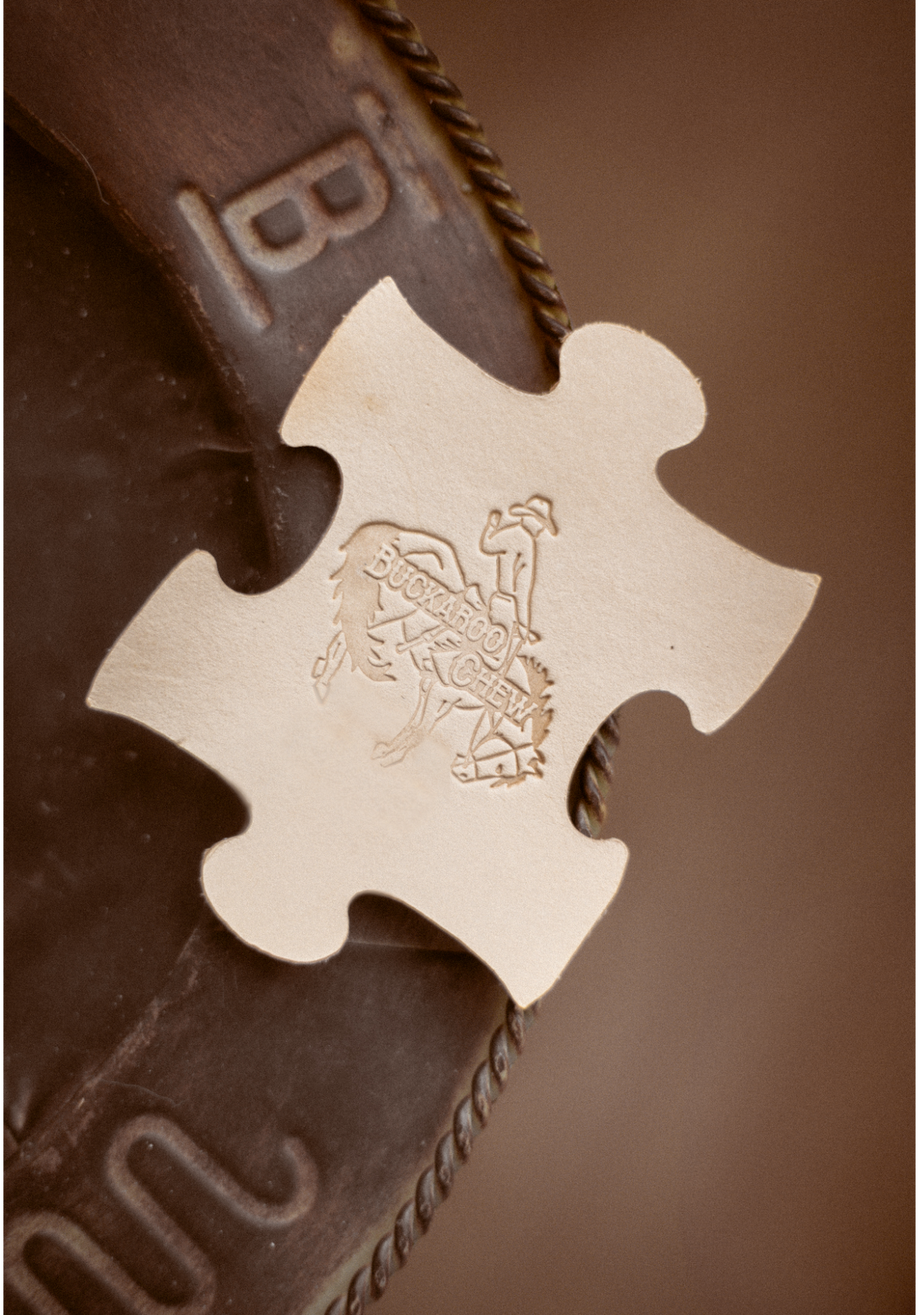
We built Buckaroo Chew around that same idea: less is truly more. Our teethers are made from vegetable-tanned leather — no plastics, no synthetic coatings, no chemicals your baby shouldn't be putting in their mouth. It's a simple material doing a simple job, the same way it has for generations of ranch families before us.
Thousands of moms have made the same choice — trading the flashy, over-engineered baby products for something simpler, purer, and time-tested. Not because it's trendy, but because it's honest. What you see is what your baby gets: real leather, nothing else.
If you're already choosing more mud puddles and more creek walks for your family, it only makes sense that what touches your baby's skin and gums would follow the same standard.
Taking the Next Step Toward Toxin-Free Parenting
Parenting toxin-free doesn't have to mean overhauling everything overnight. It can start with one small swap — trading a plastic teether for a vegetable-tanned leather one, or choosing a tallow-based balm over something full of synthetic fragrance. Small, honest choices add up.
You can explore the full lineup of Buckaroo Chew's all-natural teething chews and balms at www.buckaroochew.com, where every product is made with the same philosophy: simple, grounding, and free of anything your family doesn't need.
Because in the end, what childhood — and parenting — actually needs isn't more. It's real.