



The collar of the shirt. The crib rail. The sleeve that's damp by nine in the morning. The seatbelt strap, the corner of the board book, your shoulder while you're trying to get dinner on.
If you've got a baby or toddler who chews on everything, you have probably already been told the same three things. It's a phase. It's a habit. They'll grow out of it.
I want to offer a different way to look at it, because it changed how I saw my own kids — and it's the reason this whole company exists.
Chewing isn't a habit. It's an input.
A habit is something a child does for no particular reason. An input is something a child's body is asking for.
Chewing is the second one.
The mouth and jaw are among the very first places a baby learns about the world. Long before a child can tell you they're tired, overwhelmed, hurting, or bored, they can put something in their mouth and get information back. Pressure. Texture. Resistance. Temperature.
That's why the shirt collar goes in. That's why the crib rail has teeth marks. Your child isn't being defiant. They found something that works and they're using it.
Once you see chewing as a request instead of a misbehavior, the question stops being how do I stop this and becomes what are they asking for, and what am I handing them to do it with?
Why do babies and toddlers chew on everything?
There's rarely one single answer, and most little ones are working through more than one of these at a time.
Teething. The obvious one. New teeth pushing through means sore, busy gums, and firm pressure is what a child instinctively reaches for.
Learning. For most of the first year, the mouth has more nerve endings and more fine-grained feedback than the hands do. Mouthing an object is genuinely how a baby studies it.
Oral seeking. Some children simply want more mouth input than others, and it doesn't stop when the teeth come in. Occupational therapists talk about oral input as a normal part of how kids take in the world, and it varies wildly from child to child. One of mine barely mouthed anything. One would have chewed through a fence post.
Transitions and big feelings. New house, new sibling, first day at a new sitter, the end of a long afternoon. Chewing often climbs during the weeks when everything else is changing.
Plain old tiredness. Watch the clock. A lot of chewing happens in the last hour before a nap.
When your toddler chews on clothes, blankets, and crib rails
This is the stage that tends to worry parents most, because the baby teething window has technically passed and the chewing hasn't.
Here's the thing worth sitting with: a toddler chewing on clothes isn't chewing on clothes because they love the taste of cotton. They're chewing on clothes because clothes are what's within reach.
Sleeves, collars, blanket corners, crib rails, and car seat straps are all things a child has constant access to and no one ever takes away. They are, functionally, the default. If you take the shirt out of their mouth twenty times a day and never put anything in its place, you're removing the tool without answering the request.
You can't take chewing away. You can only trade it.
What to look for in something safe to chew
If you're going to hand your child something on purpose, it's worth being picky. A few things I look for, and a few I won't budge on:
Know what it's actually made of. "BPA-free" tells you what isn't in something, not what is. Ask what the material is, where it came from, and how it was made. A company that's proud of its answer will give you one.
Skip the mystery dyes. If it's a color that doesn't exist anywhere in nature, ask why it needed to be that color. Teethers get chewed for hours. That's not the place for a decorative shortcut.
Check the size and shape. It needs to be too big to swallow, with no small parts that can break loose. Inspect anything your child chews regularly, and retire it when it starts to wear.
Ask about testing. Children's products sold in the United States are required to be third-party tested to federal CPSIA standards, including limits on lead and phthalates. Any brand should be able to tell you plainly that their product is tested and certified.
Make sure it's washable. Whatever you choose is going to hit the floor of a grocery store. Plan for it.
Why we make ours out of vegetable-tanned leather
I went looking for a better answer to this for my own kids and didn't love what I found, so we made one.
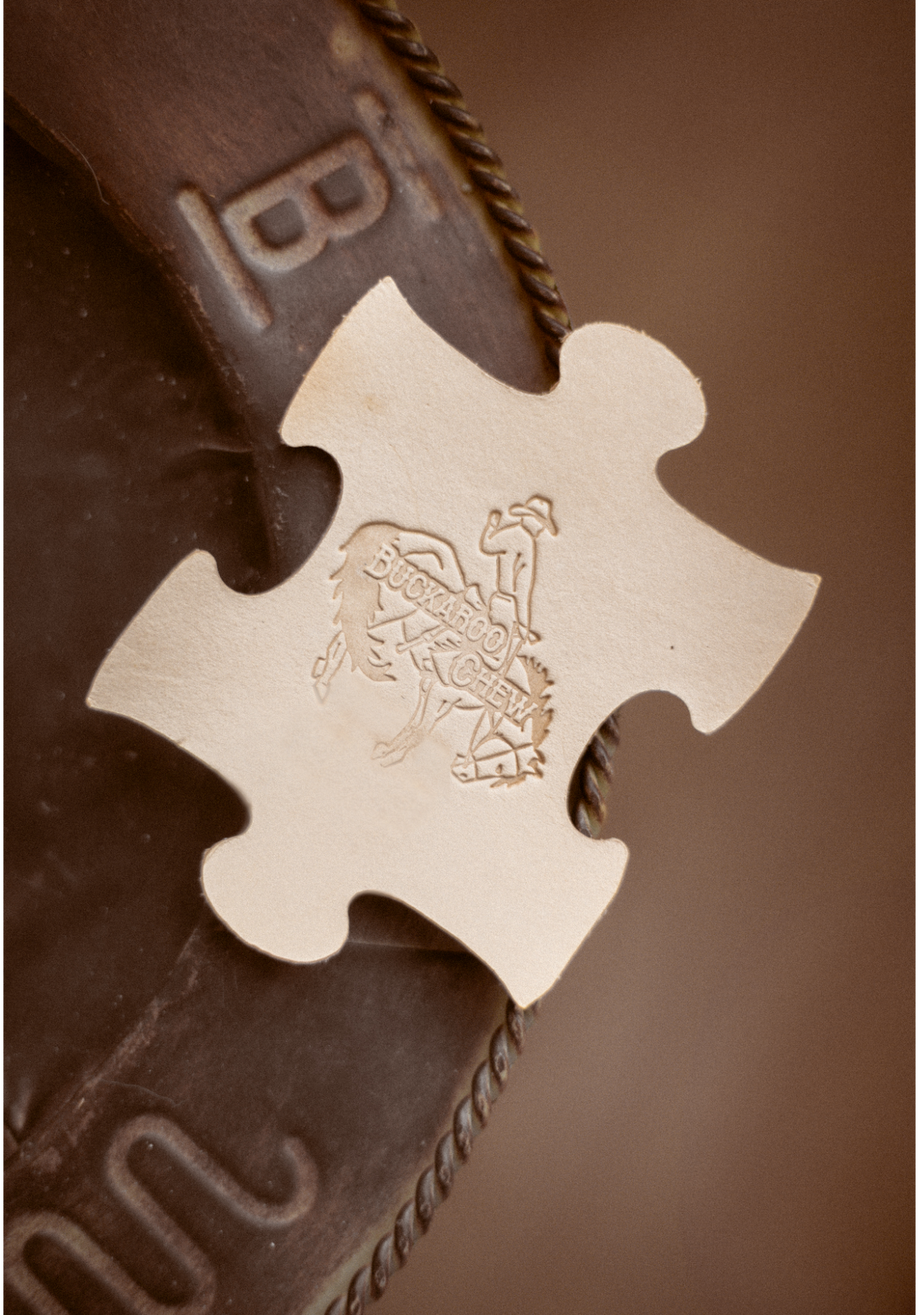
Our chews are cut from vegetable-tanned leather — tanned with tannin from mimosa tree bark rather than the chrome salts used in most conventional leather. It's the older, slower method, and it's the reason the material can be finished simply and honestly. We condition ours with beef tallow instead of a synthetic coating.
The texture is the part parents tell us about. Leather has some give to it. It isn't hard like wood or squeaky like plastic, and a child can work it for a long time without it falling apart. Every production run is third-party tested and certified for children's products.
Old ways for a reason.
When to check in with your pediatrician
Most chewing is ordinary, and the great majority of it resolves on its own. Bring it up with your pediatrician if your child is regularly swallowing non-food items, if the chewing comes with feeding or speech concerns, if it seems tied to pain you can't identify, or honestly if it's just weighing on you. That's what the visit is for, and a pediatric occupational therapist can be a real help for kids who seek a lot of oral input.
Frequently asked questions
Is it normal for my baby to chew on everything? Yes. Mouthing objects is one of the main ways babies learn, and it's typical well into toddlerhood. What matters more is what they have access to chew on.
Why does my toddler chew on their shirt? Usually because it's always there. Clothing is the most available thing a child has, so it becomes the default when nothing better is offered.
How do I get my child to stop chewing on everything?
Trading usually works better than taking away. Keep one designated chew within reach, offer it before the moments you know are hard, and give it time.
At what age do kids stop chewing on things? Heavy mouthing generally eases up as the toddler years go on, but plenty of children keep seeking oral input longer than that, and it's still within the range of normal.
One last thing
If you've been feeling like you're failing at this because your kid gnaws on everything they can reach, I'd like to take that off your shoulders.
You are not raising a child who won't stop chewing. You're raising a child who figured out something that works for them, and who has been handed the wrong thing to do it with. That's not a discipline problem. That's a supply problem, and it's one you can solve today.
Give them something honest to chew on. Our Buckaroo Chew teethers are made from vegetable-tanned leather and beef tallow, tested, certified, and made right here in the USA. You can see them at BuckarooChew.com.