

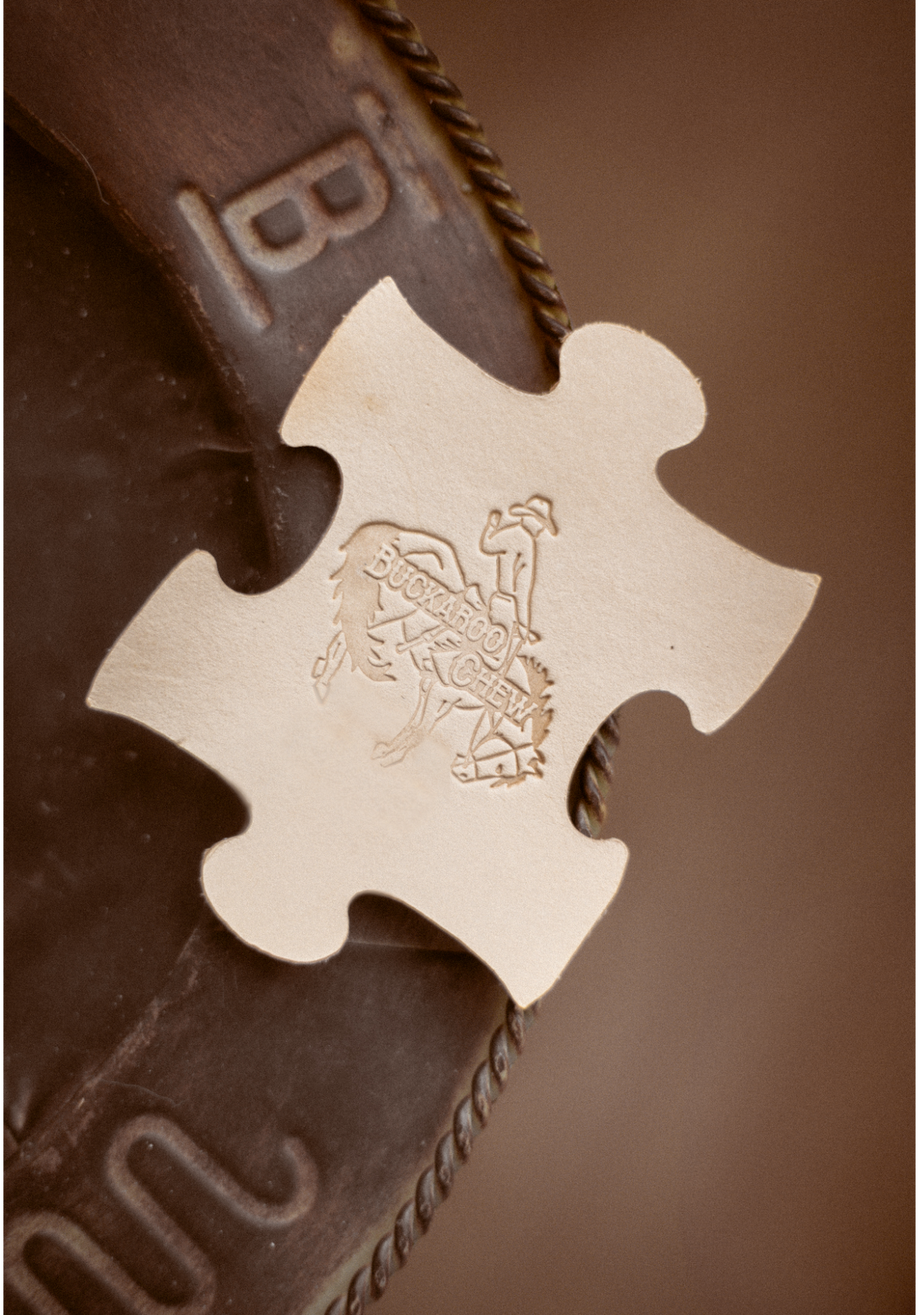


FAQ Friday: Everything Y'all Have Been Asking Us About the Buckaroo Chew
Every Friday, we used to go through the comments and DMs and pull out the questions we're getting the most. We decided to start doing this again every once in a while! This week's batch covers tallow reapplication, what our leather is actually made of, timing and safety, and a bonus question that comes up more than you'd think. Here's the full rundown — with a little more meat on the bone than an Instagram caption allows.
1. Does the Chamomile Tallow Come With the Chew, or Do I Buy It Separately?
Every Buckaroo Chew leather teether ships with chamomile tallow already worked into the leather during finishing. There's nothing to apply before your baby's first chew — it's ready to go straight out of the package.
Over time, though, any vegetable-tanned leather benefits from being reconditioned, the same way a leather boot or a well-loved saddle needs oiling now and then. Regular chewing, drooling, and everyday wear gradually wear down the tallow worked into the surface. A few signs it's time to recondition:
- The leather starts to feel stiff or dry instead of supple
- The surface looks dull rather than slightly matte-soft
- It's been a few months of regular daily use
That's what our reapplication tins are for. A small amount worked into the leather with clean fingers, left to absorb for a few minutes, is usually all it takes.
We currently carry two tins:
- Chamomile Tallow — the same conditioning blend that's worked into every chew at finishing
- Chamomile & Clove Tallow — a newer addition, best thought of as a leather-conditioning blend rather than something applied right before a chewing session. If your little one is actively teething on the toy, we'd point you toward the plain Chamomile tallow and save the clove blend for conditioning the leather between uses.
2. Is the Leather "Straight" — What's It Actually Made Of?
Short answer: yes, and here's what that means in practice.
There are two broad ways leather gets tanned. Chrome tanning is the modern industrial standard — fast, cheap, and reliant on chromium salts and other synthetic compounds. Vegetable tanning is the older method, using tannins pulled from bark, wood, and plant material instead. It's slower and pricier, which is exactly why most mass-market leather goods have moved away from it.
Our leather is locally sourced and vegetable-tanned, finished using mimosa bark tannin — a plant tannin that's been used in traditional leatherworking for generations, valued for its natural antioxidant and amino-acid content. No chrome, no synthetic tanning agents, in the process.
On the testing side: the Buckaroo Chew has gone through third-party lab testing and holds a Children's Product Certificate (CPC), based on independent test reports confirming it meets CPSC children's product safety requirements — the same regulatory bar every children's product sold in the U.S. has to clear. It's not a vague reassurance; it's documented, third-party-verified testing tied to the exact production run.
3. Can a Five-Month-Old Use the Buckaroo Chew?
Teething timelines vary quite a bit baby to baby — some start showing signs (drooling, gum swelling, chewing on hands or objects, fussiness) as early as three or four months, others not until closer to a year. There's no single "correct" age, which is why we hear this question from parents of babies at very different stages.
The Buckaroo Chew is sized and built for babies who are mouthing objects, which typically starts well before the first tooth appears. It's been through the CPC testing process described above, which covers things like material safety, small-part/choking hazard requirements, and structural durability for children's products.
A few general safety practices worth following with any teether, ours included:
- Always supervise chewing — don't leave a baby alone with any teether
- Check the leather periodically for cracking, splitting, or loose stitching, and retire it if you see wear
- Never attach it to a cord, string, or clip around a baby's neck
- Clean with a damp cloth as needed; avoid soaking, which can dry out or warp vegetable-tanned leather
Bonus: Does This Work for Adults Too?
We get this one more than we expected, usually from parents who admit their own teeth-grinding or fidgeting habit had them eyeing the chew on the counter. And yes — plenty of adults and older kids use it. Several people in our own circle keep one nearby as a natural, satisfying chew alternative, the same idea as a fidget tool.
Worth being clear about: the Buckaroo Chew isn't marketed or tested as a therapeutic device for teeth grinding, jaw tension, or any other condition — it's a leather chewing toy that happens to feel good to gnaw on, at any age. If you're dealing with ongoing teeth grinding or jaw discomfort, that's worth a conversation with a dentist, but plenty of folks just like having something natural to chew on instead of a pen cap.
Old ways for a reason. If you've got a question we didn't cover here, drop it in the comments — it might just be next Friday's post.
Jamie, Buckaroo Chew